HILA Inclusive Businesses & Events Pledge
Make your business or event more neuro-inclusive.
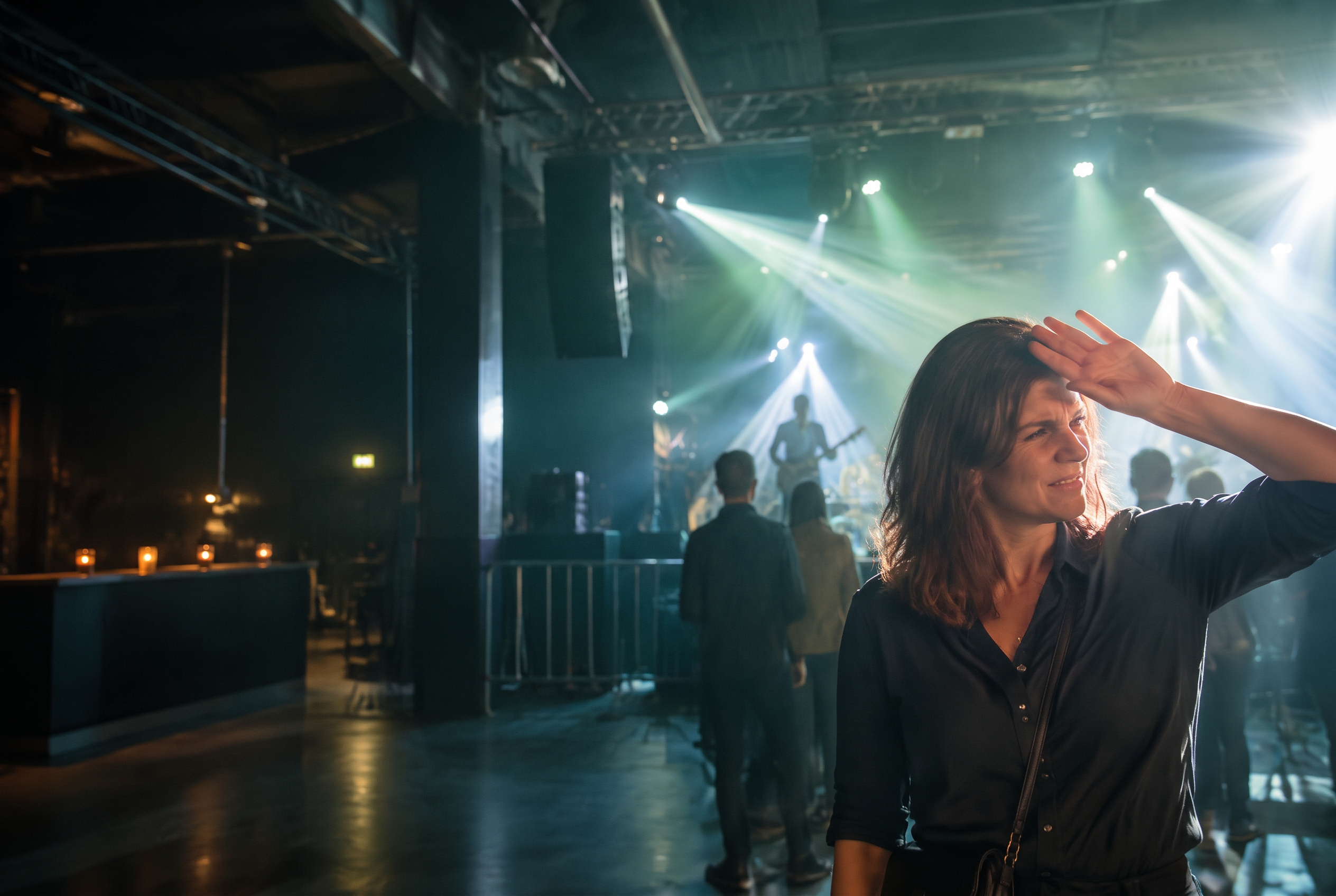
Bright or flashing lighting, poor acoustics, intense visual effects and nowhere quiet to recover can overwhelm the nervous system for some neurodivergent people and people with invisible disabilities. This can trigger migraine, dizziness, nausea, anxiety, distress, sensory overload or seizures. For some people, symptoms can last for hours or even days.
What is sensory overload?
When the brain receives more light, noise, movement or other sensory input than it can comfortably process, a person can feel overwhelmed. The body may respond with headache, dizziness, nausea, anxiety, distress, confusion, exhaustion or the need to leave.
For example:
- bright flashing or strobing lights
- intense lights aimed into people’s eyes
- loud or echoing acoustics
- rapidly changing visual effects
- harsh flickering lighting
- no calm area to sit and recover
How neuro-inclusive is your business or event?
- 1
Check your business or event
Complete the free neuro-inclusion check for your business, venue or event type.
- 2
Read your personalised recommendations
See what you already do well and the specific barriers to improve.
- 3
Build your HILA Neuro-Inclusion Pledge
Choose the changes you will make and explain how you will do them.
- 4
Apply for the free directory
Reach a projected score of at least 80%, address or pledge every high-priority barrier, and choose directory consent so HILA can review your pledge.
- 5
Receive your badge after approval
After HILA approves, receive your pledge badge for your website, flyer or signage. Your approval email also includes your listing link if you chose directory consent.
The pledge is a commitment programme. It is separate from HILA certification.
Why neuro-inclusion matters for your business or event
Welcome more people
Reduce avoidable sensory barriers so more people can take part.
Help visitors plan
Clear advance information helps people know what to expect.
Make staying easier
Calmer options give overwhelmed visitors somewhere to take a break.
Give staff clearer ways to help
Practical support steps help your team respond calmly.
Show your commitment
Share your HILA pledge badge after your pledge is approved.
Apply for the free directory
Eligible pledges can appear after HILA review and your consent.
Who can be affected by sensory overload, and what can happen?
Autism
- Too much noise, light or activity at once can feel overwhelming
- Difficulty understanding speech when acoustics are loud or echoing
- Anxiety or distress
- Exhaustion, shutdown or needing to leave and recover
ADHD
- Easily distracted when too much is happening at once
- Overwhelmed by too much noise, light or visual activity
- Restless or agitated
- Mentally exhausted or unable to concentrate
Migraine, vestibular migraine and vestibular disorders
5 minutes to 72 hoursVestibular migraine episode duration
- Sensitivity to light and loud or echoing acoustics
- Headache or migraine pain
- Dizziness or vertigo (feeling as if you or the room is moving)
- Nausea or imbalance
- Blurry vision or visual aura, such as flashing shapes or zigzag lines
- Brain fog or difficulty concentrating
- Symptoms that can continue after leaving the venue
Episodes can last this long, which helps explain why symptoms may continue after an event.
Read the evidence for Migraine, vestibular migraine and vestibular disordersPhotosensitive epilepsy
- Flashing lights or some high-contrast patterns can trigger seizures for some people with epilepsy
Sensory processing differences and other neurological or invisible disabilities
- Sensory overwhelm, fatigue or pain
- Dizziness or nausea
- Needing to step away and recover, depending on the person
How many people live with disability or neurodivergence?
5.5 million Australians
21.4% of Australia’s population
The latest ABS national disability survey found 5.5 million Australians were living with disability in 2022.
Source: ABS disability survey, 2022Around 80%
of disabilities are estimated to be non-visible
An estimate shared by the NSW Government in its Hidden Disabilities Sunflower information.
Source: NSW Government / Hidden Disabilities SunflowerAround 15 to 20%
of people are estimated to be neurodivergent
The National Mental Health Commission cites this estimate in its workplace guidance.
Source: National Mental Health Commission1 in 20 Australians
live with ADHD
ADHD Australia describes ADHD as affecting around one in twenty Australians.
Source: ADHD Australia290,900 Autistic Australians
1.1% of the Australian population
The latest ABS autism analysis relates to the 2022 national survey.
Source: ABS autism analysis, 20224.9 million Australians
live with migraine
An estimate reported by Headache Australia.
Source: Headache Australia1.3 billion people worldwide
About 16%, or 1 in 6 people
WHO estimates this many people experience significant disability.
Source: World Health Organization
These groups overlap and must not be added together.
Evidence sources and what the figures mean
- ABS disability survey, 2022
- NSW Government / Hidden Disabilities Sunflower
- National Mental Health Commission
- ADHD Australia
- ABS autism analysis, 2022
- Headache Australia
- World Health Organization
- Autism sensory difficulties research
- ADHD sensory differences research
- Headache Australia: migraine symptoms
- VeDA: vestibular migraine
- Vestibular migraine episode criteria
- VeDA: light sensitivity
- Epilepsy Foundation: photosensitivity
- Epilepsy Foundation: visually provoked seizures
- WHO safe listening standard
Could your business or event be creating invisible barriers?
Flashing, strobing or rapid light changes
Repeated flashing can trigger migraine, dizziness, nausea or changes to vision for some people. It can also trigger seizures in people who are sensitive to these effects.
Bright lights aimed into people’s eyes
Intense flashing or rapidly changing lighting aimed into faces or direct sightlines can create severe glare in a dark venue. It may trigger migraine, dizziness, nausea, visual discomfort, blurred vision or difficulty seeing for some people.
Flickering or harsh cool lighting
Flickering fluorescent or poor quality LED lighting and harsh cool lighting can contribute to headache or migraine, dizziness, nausea, eye strain, blurred or unstable vision, difficulty concentrating and fatigue for some people. Certain flicker patterns can also trigger visually provoked seizures in susceptible people.
UV, blacklight and intense visual effects
UV or blacklight, intense blue or violet effects and extreme contrast can feel overwhelming. For some people, intense effects may contribute to visual discomfort, migraine, dizziness, nausea or difficulty seeing clearly.
Excessive volume, echo and poor acoustics
Very loud or echoing acoustics can make speech hard to understand and contribute to sensory overload, migraine or noise sensitivity, distress and fatigue. High audio exposure can also damage hearing.
Busy patterns and rapidly moving visuals
Strong contrasting patterns and fast moving visuals can cause visual discomfort, migraine, visually induced dizziness, nausea, blurred or unstable vision and difficulty concentrating for some people. Some repeated high-contrast patterns can also trigger seizures in susceptible people.
No calm recovery area
Without a quieter area away from intense lighting and speakers, a visitor may need to leave completely rather than recover and continue.
No clear information before booking or arrival
Visitors may arrive unprepared for lighting, acoustics or other sensory conditions. Without advance information, they may be unable to plan their visit or may leave early.
Staff unsure how to help
Someone who is overwhelmed may struggle to speak or explain what is wrong. If staff do not understand what is happening, the person may not receive useful support.
What a neuro-inclusive business or event can do
Lighting and visual effects
- Avoid strobe lighting and unnecessary rapid flashing effects.
- Never aim intense flashing or rapidly changing lighting directly into guest or audience faces or direct sightlines.
- Use slower, more predictable lighting changes. Avoid rapid high-contrast colour changes.
- Use steady, flicker controlled general lighting. Choose warmer lighting where practical instead of harsh cool blue light.
- Avoid pairing a very dark room with extremely bright effects where practical.
- Minimise nonessential UV or blacklight and intense blue or violet effects. If they are part of the experience, offer an area or session with gentler lighting and fewer effects.
- Avoid strong repetitive high-contrast stripes or patterns and rapidly moving visuals.
Acoustics and speaker positioning
- Lower unnecessary extreme volume and use professional audio tuning to avoid harsh peaks.
- Reduce echo and reverberation, which is noise that keeps bouncing around a room. Use suitable acoustic panels, curtains, soft finishes or ceiling treatments to absorb it.
- Ask an audio professional to position, aim and tune speakers for even coverage, so nearby guests are not blasted to reach the rest of the room. Speaker placement must suit the venue.
- Where suitable, use distributed speakers or extra speakers timed to the main system, rather than simply turning the main speakers louder.
- Keep the calm recovery area genuinely away from speakers and amplified audio.
- At amplified events, monitor sound levels with calibrated equipment, which has been checked to measure accurately.
- Use the WHO maximum average sound level of 100 dB LAeq over 15 minutes for amplified venues and events as a hearing safety ceiling. Offer hearing protection and train staff in safe listening.
100 dB is a hearing safety ceiling, not a neuro-inclusive comfort level. Some people need much lower levels. LAeq means an average measured level that takes account of how human hearing responds to different pitches.
Read the WHO safe listening standardA calm recovery area
A calm recovery area is somewhere a person can step away for a short time without leaving the venue or event completely.
- Choose an area away from speakers and intense visual effects.
- Use lower, steady lighting with no flashing effects, and quieter acoustics with as little echo as practical.
- Keep it visually simple, without screens or fast moving effects.
- Use clear signs so people can find it quickly. Make sure staff can guide someone there without asking for their diagnosis.
- Tell visitors how to step out and return when operations and safety allow.
Information before booking or arrival
Sensory information means a clear description of the lighting, acoustics and other things visitors will experience.
- Publish a short guide on your website or ticket page before booking or arrival.
- Say whether there will be strobes or flashing, UV or blacklight, very loud amplified audio, moving visuals, fog or smoke, and strong scents or fragrances where relevant.
- Describe the calm recovery area and the exact process for stepping out and returning.
- Give a contact email or phone number so visitors can ask for help before arrival.
- If an intense effect cannot be removed, describe it clearly before purchase and at entry.
Staff support and the Hidden Disabilities Sunflower
- Teach staff about invisible disabilities and neuro-inclusion, including how lighting and acoustics can affect visitors.
- Explain signs of overwhelm: shielding eyes, distress, difficulty communicating, dizziness or needing to leave.
- Ask calmly what would help. Do not ask people to explain or prove their disability.
- Make sure staff know the calm recovery area and exactly how guests can step out and return. Follow your emergency procedure if someone needs immediate medical help.
- Ask visitors for feedback and record a specific improvement and the date you will make it.
Recognise the Hidden Disabilities Sunflower
A Sunflower lanyard, card or pin is a voluntary sign that someone may have a non-visible disability and need extra time, patience, understanding or support. Ask how you can help. Do not ask the person to explain or prove their disability.
The Sunflower scheme is run by a separate organisation.
Learn about the Hidden Disabilities SunflowerFind businesses and events with reviewed commitments
- HILA Pledged
- HILA Pledged means HILA has reviewed the organisation’s public commitments. Read those commitments to see what the business or event has promised to do.
- HILA Certified
- HILA Certified is a separate, higher level pathway that requires evidence and human review. Only active, approved certification records appear here. It is not government accreditation.
Public register
Help shape a more neuro-inclusive directory.
Be among the first businesses or events to take the HILA Neuro-Inclusion Pledge and apply for a free listing in the directory. HILA reviews pledges before publishing consented listings.
Start the Neuro-Inclusion Check